Your engine already sends the numbers.
Almost none of it reaches the person steering.
We built Mago to give it back.
Actual interface · demo data · measured sea (NOAA via openmarina)
24 ft center console · sr205, traced
Works with any engine on an NMEA 2000 backbone. The round display above is a prototype we're testing in the open — not part of the $149.
The sea moves.
The reading doesn't.
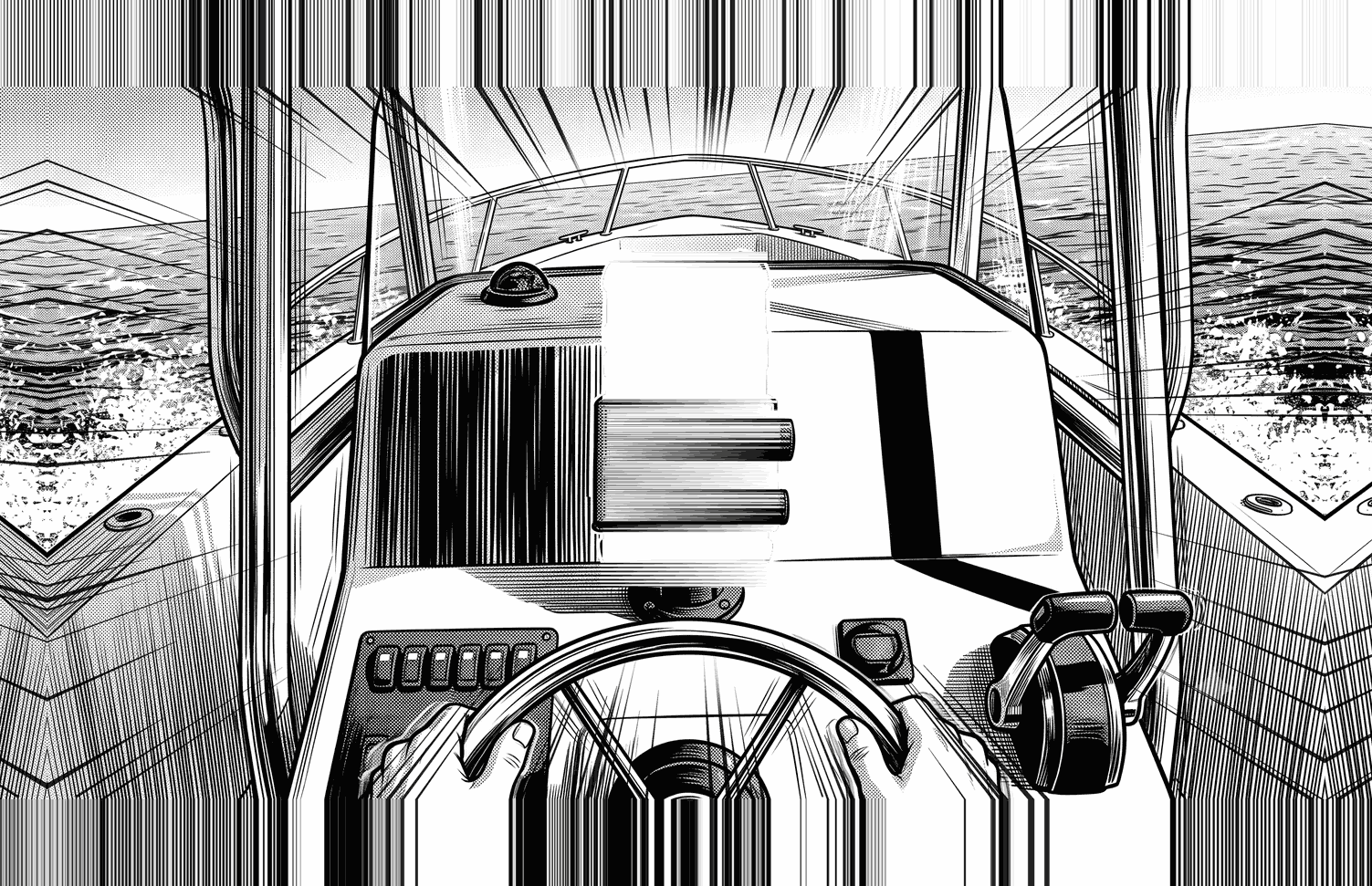
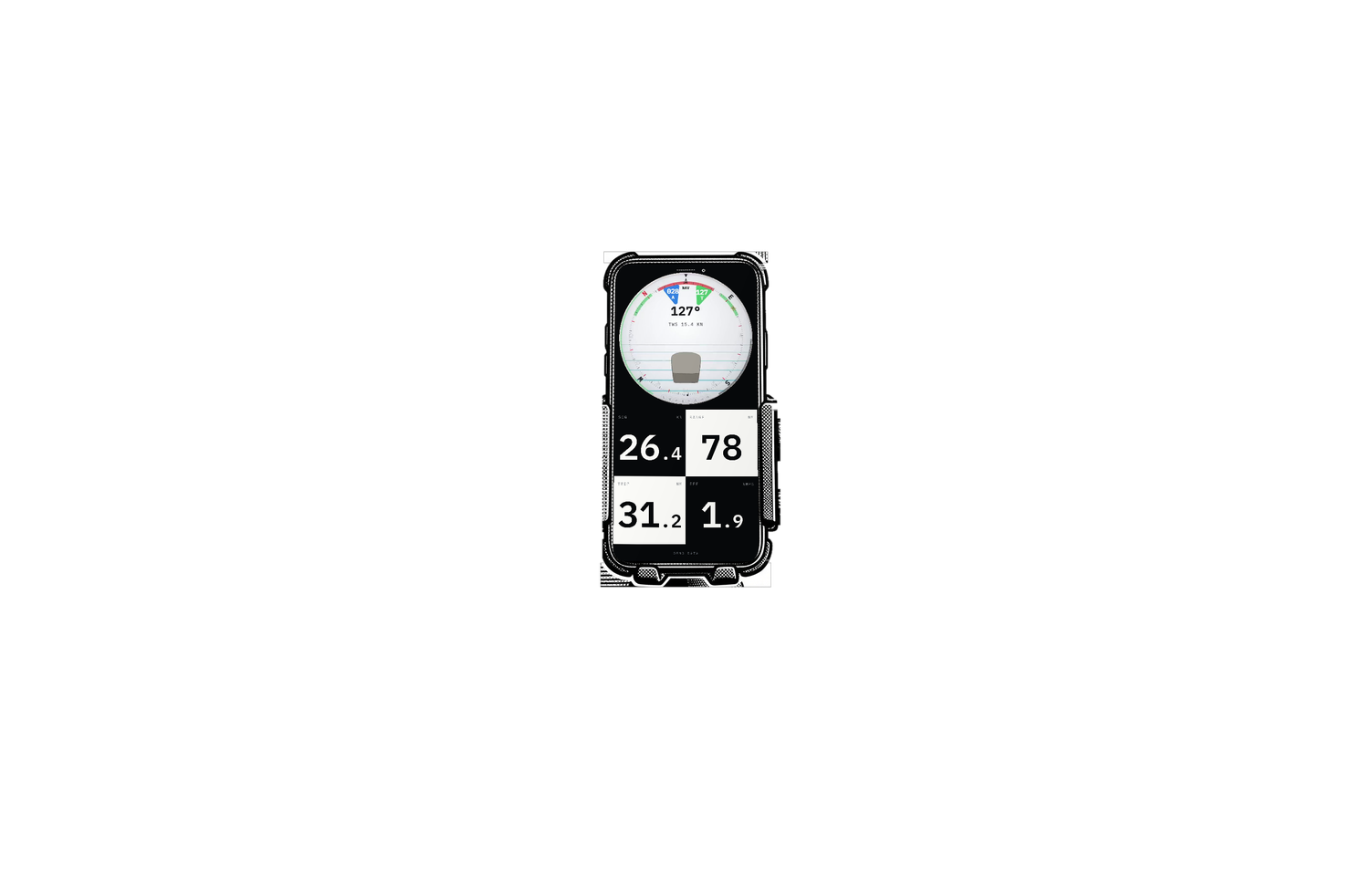

A view forward from the helm of a center console under way, rolling in a seaway. A phone in a dash mount shows the Mago interface: heading, speed over ground, range, trip and efficiency. The phone heels with the boat. A slider wipes across the round dial: with horizon lock off the dial heels with everything else, and with horizon lock on the same dial holds level.
Four rules we don't bend.
The hard part of marine data isn't gathering it. It's being able to trust what you're shown.
We only show what we measured.
Every value carries its source. Nothing is inferred and presented as observed. Where a screen shows demo data, it says demo data — on the screen and in the caption.
Not a black box.
What ships stays rule-based. The logic behind a reading is a rule you can read, not a verdict you have to accept. When we don't know something, the app says so.
Open standards, no lock-in.
Works with any engine on an NMEA 2000 backbone. Signal K compatible, and our marine-data library is open source on GitHub. Your data stays readable by tools that aren't ours. Nothing here is a hostage.
Priced to be owned, not justified.
$149, one time. No subscription, no tiers, no per-boat licence. If a price needs a business case before you can try it, it's the wrong price for a captain running one boat.
A sensor and an app. $149.
$149 brings the Mago One sensor and the app — one time, no subscription. Works with any engine on an NMEA 2000 backbone.
Mago One
Plugs into your NMEA 2000 backbone and adds a 9-axis motion sensor — because an instrument that can't feel the boat move can't hold a horizon. It connects at the backbone, not at the engine.
Read clearly
Fuel-efficiency guidance, early engine-health flags, a ride-comfort readout — in plain language, with the numbers behind them. The ride-comfort readout runs today; fuel and engine health ship with the Founding Fleet.
Every value, sourced
Each number shows where it came from. Nothing to take on faith.
Targeting ~10% fuel · testing it in the open · 2 provisional patents filed (2026)
A different grade —
measured, not claimed.
Four finishes we're still testing.
These are prototype finishes, explored in the open — not part of the $149. Four material families that survive salt, sun and vibration at a helm. 316 is what "marine grade" literally means.
Turn the dial above · each finish has its own detent sound
Mago One reads your engine over NMEA 2000. If your boat doesn't have an NMEA 2000 backbone, there is nothing for it to read. Not sure what your boat has? Send a photo of your helm to ahoy@magomarine.com before you buy — we'd rather talk you out of it than take $149 for a sensor that can't see your engine.
Be one of the first 100 captains.
Mago One sensor + app. One time, no subscription.
$149, one time. Your readings and alerts never go behind a subscription. Any new service later will be separate, and your choice.
Get on the Founding Fleet list.
First units ship early 2027. Miami-Dade first. Leave your email; we'll reach out with a pre-order spot.
No spam. Built in Miami.
From Miami, for the ocean.
Boats already broadcast rich data over NMEA 2000 — but owners can't see or act on it without expensive, manufacturer-locked hardware. Mago Marine makes that data usable: an affordable sensor, transparent rule-based analysis, open standards. We sell the sensor today. Later we plan an analytics service built on boat data — separate from the sensor, and your choice.
Led by Jiwon Baik (system designer & founder) and Paolo Arrunategui (founding engineer, Lima). Delaware C-Corp. We build in the open — what works, and what doesn't.
Marine IoT, with integrity.